Monday, April 16, 2012

Expanding our Knowledge on Earthquakes

                Most people in Virginia, prior to August, 2011, would have told you that they did not need to know very much about earthquakes because "we don't really have them here".   A lot of people in the world feel the same way.  After the 5.8 earthquake in Central Virginia, and millions and millions of dollars worth of damage here,  a lot of people were not only surprized, they were also ill prepared.    All human beings, regardless of where we live, could travel to a place where an earthquake is occurring.  Your life and the lives of your party could depend upon general knowledge of earthquakes.
      
              
                 Most of us know, and accept that many of the earthquakes in the world occur along or near the "Ring of Fire" as drawn above.   If I were to have drawn this, I would have also included Australia.

                 The fact is, that there are many more faults in the Earth than most people know about.  There are potentials for quakes in many places, and how well you would survive, largely depends on where you are and what you are doing when they occur.

                One of the things which may be helpful to you, if you are in the US, or even in Canada, is to sign up for the US Geological Surveys Real Time Feed.

      http://earthquake.usgs.gov/earthquakes/feed/

       I believe this will also work if you are in other nations as well.


               Second, go to www.usgs.gov and research what types of earthquakes have occurred in your region in the past.    Then, go to your local historical society.   Find out if earthquakes or other natural disasters have occurred in your region.    It is only following evaluating your regional risk that you and your family can properly prepare for your region.   The correct preparations do indeed shift from place to place.
In California, for example, you are taught to remain in a building within the doorway area, because collapse of overhead wires above you could be fatal.  In Virginia, we are taught to exit the building and stand in the middle of the front yard, because the bulk of wires here are buried, and because the hazard of a collapsing building is thought to be greater here.  Find out what the rules and nuances are in your area.

They have not disclosed the location of this road breach. (Photo: survival-goods.com)
            
  It's important to make mental notes of alternate routes one could take in order to get home, or evacuate from home.   Road damage was a continued issue in Virginia following aftershocks.   Apparently, many roads are built with streams below them, and this makes them even more vulnerable to crumbling during earthquakes.  Since aftershocks are cumulative in their damage, a road which appears solid can deteriorate or collapse following an aftershock. 


       This is an interesting phenomenon which I have not yet seen.   This is a Sand Blow.  During an earthquake, the earthquake waves can push sand up through openings which are created during the quake, leaving sandy looking piles which look a but like a volcano.  Children should not play near these.  This occurred in Lepanto, Arkansas in 1964.

               It would be impossible to talk about sand boils without also touching on a phenomenon called "Liquefaction".    In February, 2011, inhabitants of Christchurch, New Zealand did not know much about liquefaction either.   Liquefaction occurs when, during a quake, soil, sand and groundwater mix, creating a rapidly moving mud everywhere.   In Christchurch, liquefaction was a major factor in building collapse and in many of the deaths which occurred.   Interestingly, aftershocks produced much higher levels of liquefaction, than did the initial quake.

    http://www.nzherald.co.nz/nz/news/article.cfm?c_id=1&objectid=10708723


A demonstration of Liquefaction in Christchurch, NZ


This instructive material is from :http://sciblogs.co.nz/visibly-shaken/2010/09/06/christchurchs-liquefaction-infographic/


                The best that we can do, is to learn whatever we can about the character and occurrances of earthquake activity in the region in which you live.   Set up your home and furniture in a manner in which injury will be less likely to occur should an earthquake occur, especially during sleeping hours.   Make plans for evacuation from your home and area.  Communicate these plans to your family members.  Gather emergency kits that not only allow your family to shelter in place, or evacuate when necessary, but consider earthquake issues specifically.    If you have high water tables where you are, then you may wish to cache your emergency supplies in multiple areas.   If all your emergency supplies are kept, for example, in a basement, and then flooding or post earthquake liquefaction ruins them, then you could be in much worse shape.  Consider metal trash cans with extra supplies in multiple locations.


Friday, April 13, 2012

The Value of Organization

          Before we had kids I had most things well organized.  My address book was complete and orderly. My files were all in order and I could find the warranties to anything we had, including the tires on the cars. I knew where most everything we had was located, and the maintenance to everything got done.  When the first two kids were born, it didn't take me long to realize that I either had time to keep everything obsessively organized, or I had time to raise great kids. I probably couldn't do both.  I also realized pretty quickly that although kids don't want things to be a mess, that the things they will remember when looking back at their childhoods will not be that my recipe file was alphabetical, or that I could access all our receipts in just a moment.  They would remember that I made time for them and that they were important to us. So, I made the adjustment from an immaculate house to simply an orderly one, and I kept my bill file the center of my obsessive compulsive neurosis with regard to paperwork and files.  When the third and fourth children arrived, it became hard even to keep the house simply orderly, and sometimes when they were small it went from orderly to disorderly periodically.  I think perhaps that the only time it was immaculate with four children, was just before a house was to be sold and we were to head to another.

This child's closet was inexpensively organized using items from a dollar store.  (Photo: organizingconnection.com)  No, this isn't our Daniel, but it certainly does look like him at about four.


          Now, we enter a new chapter in our lives.  Most of our children are ostensibly grown.  Only one child  below eighteen is a our home. It's time to reclaim the order which made me comfortable and made it possible for me to be economical about purchases.  I am probably one of the only people who have claimed to both Pyrex and Corelle when a dish was broken.  No one but me keeps the lifetime warranty these items have, and then if they do recall them, they can't find the paperwork OR their receipt.


This is not your objective, but this can happen faster than most of us realize. (Photo: spaceinc.net)
 

           There are many advantages to keeping an organized home.  First, most of us can think more clearly when we know where everything is located.  Secondly, an orderly home probably eventually breeds a more orderly and organized child. (Although I will admit here, that it can take awhile.) A home where there is an assigned place for most everything enables a child to clean up for himself, and not to require your input while doing most of it.  Thirdly, I believe that creativity is nurtured by keeping supplies of all kinds in accessible areas and then allowing areas where these supplies can be used, and can be turned into a mess, at least initially until the project is complete.  Fourth, an organized home makes photographing everything you have easier.  This is useful when documenting your possessions for homeowners insurance.  They are unlikely to replace everything you have in a total loss situation, but whatever you can demonstrate to them will help you to get as close to reasonable reimbursement as possible. An organized home also makes it easier for you to decide the best places for your evacuation kits, medical supplies, and emergency supplies for sheltering in place.


Offices can be tight and small, but organized so that you can find, bills, paperwork, or anything else. (Photo: apartmentthetapy.com)
 

Being organized can also allow you to get a great deal more done than if you are disorganized.   When I realize that just a few years ago, I was a wife and mother raising then four children, a college instructor teaching between four and five classes in one semester (some semesters, nor all), a nurse occasionally working at a clinic to keep clinical skills fresh, and writing nursing and medical articles for publication on a schedule, I wonder how I did it all.   I did it by being feverishly organized.  I had a desk for college related work, and a computer for test creation and for class related functions.  I had another desk for homeschooling related paperwork.   I had a section of my desk arranged for continuing education for nursing, which is necessary for continued licensure for some of the states in which I still retain one.  I found that creating "stations" for certain activities, much the same way that my mother had a sewing station at her sewing machine for clothing repairs, and a desk for paying bills, and a table for canning, etc. helped me to shift gears and use time more efficiently.    I also learned that multi-tasking is not all that it's cracked up to be.  Rather than multi-tasking, I prefer to list what I have to do in a given day.  Then, I select first the two items I would like to do the least, and I complete them first.  This way, the list gets completed that day, and it seems downhill after the first two items or so.  In addition, I do one thing at a time, rather than three.  I have found that I am simply more efficient completing one item at a time with my full attention.  There are simply fewer errors, and less time spent later on correction, or the embarassment of needing correction on something in the first place.

An organized garage. (Photo: creativespaceorganizing.com )


This is one of my own garage areas.  This bay has evolved to be overflow storage to some household and survival supplies, a metal cabinet for household chemicals, and an area for maintenance supplies for my car.


This corner of this particular garage bay stores paper towels and toilet paper for the house on top, cleaning supplies for my car on the second shelf from the top, and the rest of the metal shelving unit is car maintenance and repair related. The little cart allows me to load what I need and then take it to the part of the outside of the car where I will use it.  It makes car detailing (which I really do myself) much faster.  Over the last few years we have found we do much more of the maintenance on my diesel car ourselves.


        Organizing your home and your life, is not something that can be done in a weekend, unless of course, you have just a few things.  (And if that is true, part of me envies you, as you have much less to maintain !)  Organizing is a one-thing-at-a-time task.  It takes some time to assess how your organization needs will best be served.  For years I kept a rolodex, only to find that the specific cards I always needed were the ones which children had either pulled out, or that I had lost myself.   For a time, I kept addresses and information in a computer, only to have the data lost when the computer crashed, and everything had been backed up but that.   Now, I keep a nice sized address in leather, and I keep addresses and e-mails written in pencil for easy and quick updates.   I still keep a few contacts in my computer, but mostly e-mail addresses.  It took TIME to figure out which method would work best for ME.    The same is true of filing system, and other organizational issues.
           This post is meant to be an encouragement toward Spring organization.  Don't let it overwhelm you.  Like any major daunting job, take it apart into more manageable parts and then break those down into more manageable "bites".  Happy Spring and best wishes.


Sunday, April 8, 2012

Gates

       Depending upon the type of home in which you live, gates can be very important.  Gates help to control access to your home and to your property.

In an urban or suburban setting a gate can block someone parking in your only parking space.     (Photo: Reliable Gate Systems Company, Louise, Texas)

Gates can also be constructed so that climbing them would be difficult. This gate is the access to the walking area beside an automatic gate for cars. (Photo: Reliable Gate Systems)


There are many different types of extravagant gate systems.  Some homes have a couple of gate areas such as these, and although they do limit access, when they are as expensive as some of these systems, then we must carefully consider our message.  Was our message meant to be, "Stay Out" or was it meant to be "I have valuable stuff to protect and money to burn".  Make sure your gate system, if you choose one, says what you wish it to, and nothing more. Consider your neighborhood, your finances and how your gate will be perceived.  (Photo: Reliable Gate Systems)


This less expensive gate might be more of what you had in mind. (Photo: Reliable Gate Systems)


       In rural areas, such as my own, gates are very important.  I need to prevent people who have perhaps driven out from a city from driving into the heart of our farm and perhaps trying to hunt.  We need to prevent people without an appointment from entering the farm who are casing it for a wide variety of purposes.  We need to keep out the obvious people, such as people casing the farm to rob it of anything from household goods, to farm implements, animal feeds, hays, and livestock. We also need to prevent people who might think they can sell us something from entering.  We also like to control visits from people such as timberers or tax assessors, as we would like to give them our full attention when they are here.  We need our gates to to say, "No entry here, without an appointment".   We do not need people to think we took a second mortgage in order to get them.   In choosing our gates, we went with something a bit more conservative.


     Our series of gates is based on a classic livestock gate which can be purchased in many colors or even painted your own color.  (Keep in mind, painting it yourself periodically is added maintenance)

This basic type of gate suits everything from farm entrances, either singly or placed with two side by side. These can be a good choice because they are less expensive in comparison, and then should you need more of them to control areas of access within your farm, it will be a less expensive task to add them.  We began with a couple of gates to control farm entry, and then later added other gates to limit access to the farm road which leads to the house, one which leads to the barn, etc.  This way, in an emergent situation in your nation, you could theoretically lock down your entire farm, making access with a vehicle for the purpose of looting much more difficult.   One can also create choke points on your farm in order to photograph invaders or limit passage.   (Photo: http://www.hutchison-inc.com/html/lvst_equ/gates/livestock.php   )
    

This is another less expensive alternative.  (Photo: http://www.harmonygatesystems.com/Misc.html )


This type of gate is especially helpful if you need to keep animals of some type IN.  (Photo: http://www.hutchison-inc.com/html/lvst_equ/gates/livestock.php  )


We recently added an electric gate opener which opens the gate and closes it without leaving the car. This is especially useful should you be driving in thunderstorm especially with lightning. These can be battery powered and also backup up by a solar powered system.  Keep in mind that if you install an automatic gate opener you must make arrangements for emergency services.  They need to access your home or farm periodically. (Photo: http://www.daward-automation.com/woodengates.php )
      

This is also an example of a gate which automatically opens and closes.  (Photo: http://www.daward-automation.com/woodengates.php)


              My objective here was to give you some ideas as to what you might do with your own property if you benefit from restricting access to a driveway or even a particular region of your property.


What is Haskap ?

Ripe fresh Haskap berries.

 
     When we visited Far Eastern Russia we were enthralled with so many different types of trees, plants, and opportunities to grow things.  Of course, we wanted to bring everything back, but we needed to settle for plants to be brought to North America safely and legally to avoid the spread of disease and of thugs which would disrupt what grows here. (So one would have needed a Federal Import Permit )
              Haskap is a berry which can be found in Far Eastern Russia.  It tastes like a cross between a blueberry and a raspberry.   They are in fact, native to Hokkaido, the northern island of Japan. I am told that the Japanese Haskap is slightly different than the bushes that grow in Russia.  Haskap belongs to the Lonicera caerulea L., family.  The berries grow on deciduous bushes and are also called "Blue honeysuckle".  Some people call them "honeyberries".  The Russians have developed a number of cultivars.   The bushes should grow to about six feet high and six feet wide.  The beauty of this plant is that it does really well in cold, or even frozen climates.  The bushes develop an attractive cream to yellow flower in March, and are said to be able to tolerate a 15 degree Farenheit freeze, and still produce berries.  These berries are well suited to being grown in much of Canada, and in the Williamette Valley of Oregon and colder regions of Idaho.  I think they should also be tried in New Jersey and in the Northeast.  Sadly,. I think that Virginia's climate may indeed be too warm for them to be terribly successful here, but I am willing to try.   These are also a good wetland plant, and so I will have to try to plant some in Nova Scotia.
              What can we do with Haskap ?  In Russia, they make a wonderful coleslaw with a sweeter light dressing and add a few Haskap berries to it.  We also can bake a haskap and apple pie, just as we might bake a rhubarb and strawberry pie or a blackberry and apple. Also in Russia, they make a sundae with vanilla ice cream and with haskap berries I would love to see a recipe for haskap preserves. It can also be dried, or be used to make wine.

Haskap on the vine  (Photo:  Dr. Bob Bors)


                      For people who are interested in preparedness, this may be a great berry to grow since it may be available at different times than other things that we habitually grow.  It gives us one more thing to grow, save, and use for harder times, and it's an EXCELLENT source of Vitamin C.  For many of us, it will be easier to grow than lime or lemon trees indoors.  I recently bought a Haskap Svetlana and a Haskap Borealis.  One is female and the other a pollenator.  We will plant them as soon as we amend the soil in a shady spot for them, and I will let you know how they do in sometimes very hot mountainous Virginia.  Friends from Tennessee say that haskap has been simply hanging on there, but not doing well.


More authoritative sources of Haskap information than mine:

http://www.fruit.usask.ca/articles/Haskap/AVisitorfromRussia.pdf


http://www.fruit.usask.ca/haskap.html


http://www.fruit.usask.ca/articles/wetland_haskap.pdf

http://www.homeorchardsociety.org/article/42/

http://ediblebluehoneysuckle.wordpress.com/

http://www.fruit.usask.ca/Documents/DriedHaskap.pdf

http://www.fruit.usask.ca/Documents/Haskap%20Wine.pdf


Here are some Haskap recipes:

  http://www.honeyberryusa.com/honeyberry-recipes.html


Places you can order Haskap by mail:

In USA:

http://www.honeyberryusa.com/honeyberry-plants-1.html


Canada:
     (Listing courtesy of:   http://ediblebluehoneysuckle.wordpress.com/where-to-buy/ )


US:

          Bergeson Nursery The scoop on ‘Bergeson Nursery’ here.
 
United Kingdom:

Licensed propagator for European Union, Norway and Switzerland.  Now taking orders.

http://www.haskapcentral.com/


 I have also noticed seed companies in the US advertising it this year also.

    Happy Easter Everyone !


Saturday, April 7, 2012

Professional Lightning Protection Installation- Our Experience

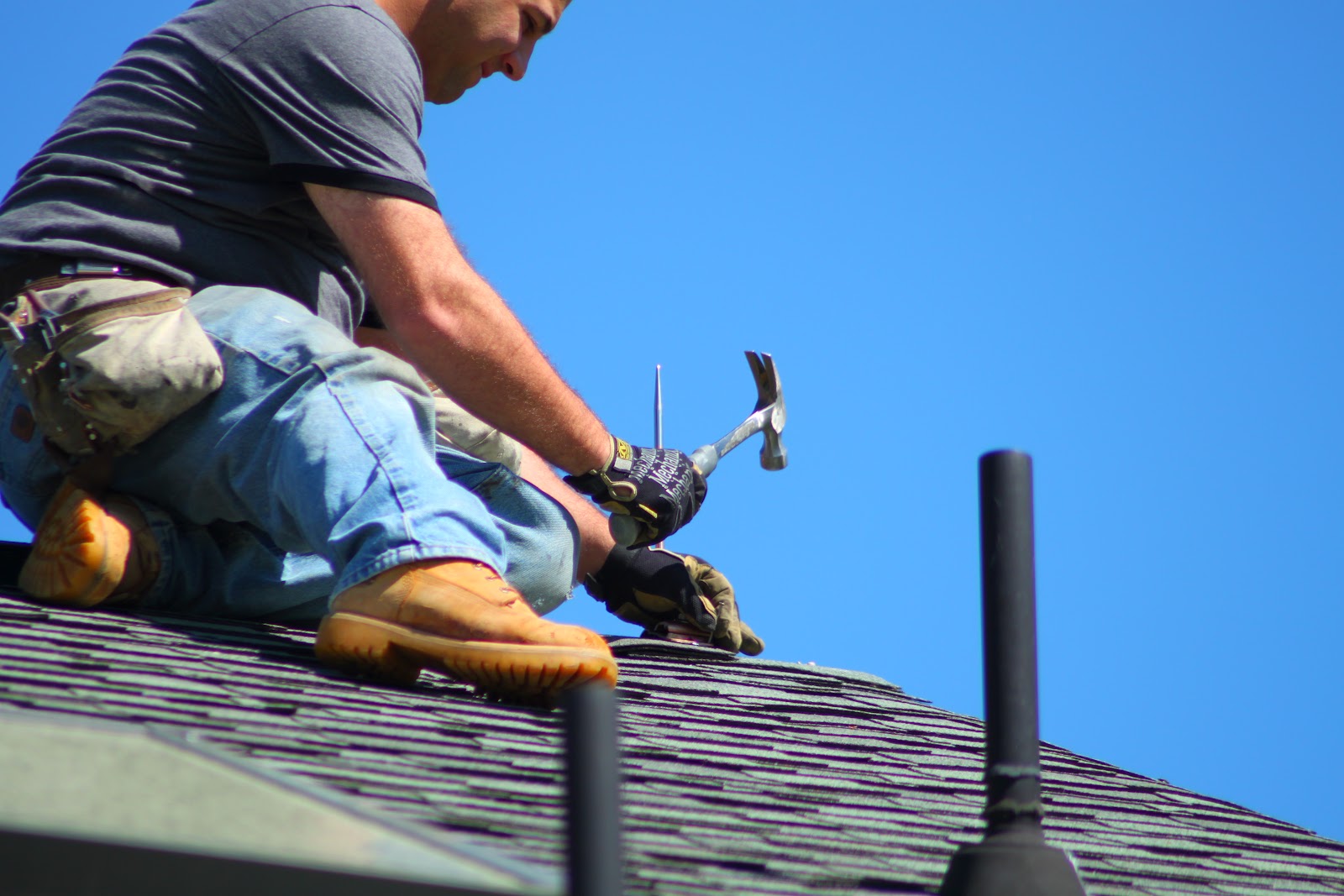
The contractors placing lightning rods on our main barn, and grounding cable while navigating the complexities of doing so with a cupola with weather vane or two.
       
   On Friday the contractors who specialize in preventing lightning damage to homes, barns, garages, outbuildings and trees arrived.  Prior to this, we had been doing research and conversing with a variety of internet companies.  My husband is an electrical engineer and we had believed that his know how, coupled with the companies on the internet who sell lightning rods and grounding equipment might enable us to do the job ourselves.  Most everyone in the US, and at this point, most of the world, is looking for ways to save money when they can.    We completed our own research recently and decided to go with a reputable Virginia company who does nothing but lightning protection, who has been in continuous business since 1947.

I don't think I could ever be this relaxed or comfortable walking on roofing.

      Had this been simply our home, then we quite possibly would have hired someone with this expertise to draw us the plan and list the materials, and then do this ourselves, but for many reasons, this was a complex project.   We have already had numerous lightning strikes in oak trees over the time in which we have owned this property. We sustained an outbuilding strike last year in which one of our sons who was inside was injured, and is still being treated.  Also, for some reason, last years lightning appears more severe than prior years.  As much as we did not wish to spend the money, good lightning protection was becoming a more important objective than it had been.  In addition, the sheer size of the job is daunting.  We need to provide lightning protection to the main house, a large two story barn, a two story workshop building, a kennel building, and a two story gambreled building. All of the outbuildings have steel roofing.  We have one more building currently occupied by alpacas, but they are being relocated to an agricultural building shortly, leaving the one story barn for ducks.  We do not have plans to provide lightning protection for the solar powered duck house, because it's location is such that it likely does not require it. Friday, a fair number of men arrived to do the job including a foreman and a project manager.  They evaluated the location of the buildings and also of the breaker boxes in each location.  One team began assembling ladders to access the first building. The project manager and my son and I were discussing the project and the location of trees we felt should be protected from lightning also due to their proximity to buildings and history of near strikes.  Before we had completed our discussion, the first team had placed lightning rods on the building with the sharpest roof pitch.  The second team began setting up ladders and measuring custom copper braided rope for the two story barn.  This was a complicated job because the roof lines to each outbuilding are different.  When having them built, we believed that we were creating architectural interest, and although that may be true, it also creates challenges in terms of lightning protection.  Each structure required placement of rods and grounding ropes in a slightly different manner.  Fairly quickly, two of the buildings were nearly complete. I was amazed to watch a fifteen to twenty foot or so copper grounding rod being buried on both sides of each building for proper grounding.  They used power equipment in order to in effect, jackhammer the rods into our rocky soil.   Then, someone proceeded to place a custom made lightning arrestor in our main barn's breaker box.  Afterward, one team began to work on the two story gambreled building while another broke off to start the main house.  I did not realize until the main house that when the copper grounding braid is attached to the six foot copper rod at each building, than they are in fact welded to each other rather than simply linked via a clamp of some kind which could disconnect in the event of flooding, earthquakes or even landscaping in the area.   By this time, it was lunchtime.  The teams were staying through lunch and when complete, would be going home a little early.  They completed our main house, and completed adding a custom arrestor to the breaker box in the main house also.   The kennel was the last building to be done, and the dogs were oddly very quiet, probably figuring that these men apparently had our blessing and certainly seemed to know what they were doing.

Here, a fifteen to twenty foot copper ground is being essentially hammered into the hard ground. This way the copper grounding cable from the roof can be attached to it.

Almost ready for this one to be attached to the copper grounding cable.  Yes, this is the Virginia clay soil that is all over the farm.  To grow anything other than native trees, all the soil must be amended.


         There are three tall oaks that will be grounded by both an arborist and the project manager another day.  Grounding trees, though necessary sometimes, as it is here, is complex and quite expensive.  We lost a cherished eighty year old oak last year due to a massive strike, just a month before our son was injured by lightning in one of the buildings near the tree.
          I don't think everyone needs professional lightning protection, but we certainly did.  I think it was worth every dime we spent in terms of better protection this year from the thunderstorms which seem to be worsening in our area.

Mounting the lightning rods themselves turned out to be the easy part.

Once the lightning rods are up, a custom braided copper braid is connected to them and then brought to the deep buried copper grounding rods.

I don't know how they get up there ! That building is TWO stories. I get dizzy sometimes on my high heels.


All of the men not only got the work done, and did it well, but they looked as if they were having fun while doing it.


          If you do need a professional lightning abatement contractor in another country, I am not sure how it is best to proceed.  I would imagine taking your time to learn about lightning damage avoidance while asking trusted friends who they used would be the best strategy.   Here is the US locating someone who knows what they are doing may be simpler. The Lightning Protection Institute keeps a page of contractors who are recognized to be competent.   You can enter your state information here, and they will list contractors.

        http://www.lightning.org/installers


    They also refer Western Canadian families to:

    http://westernlightningprotection.com/
Please visit their website. They have a heck of an introduction, as well as excellent information on lightning and the complex technologies employed in protecting buildings from its wrath.

        Interestingly, lightning seems to be less of an issue in Nova Scotia and much of Atlantic Canada, because with so much water and lakes, lightning tends to strike there, and in most circumstances,  is less of an issue than it is here.  However, not everywhere borders water, and so if you are interested, this is information on lightning rod installation in Nova Scotia.

          http://www.gov.ns.ca/lae/electricalsafety/esblightning.asp
    

    These are links to brochures on lightning protection generally:

   http://www.lightning.org/brochures-protection


           Should you be in Virginia, we can pretty heartily recommend the lightning protection contractors we used. They were recommended to us by our pharmacist who happily used them, our barn builder who has used them and fully recommends their company, and also by the Lightning Protection Institute.  They travel fairly far and wide, at least within our own state.   Their contact information follows, and we thank them also for their willingness to allow us to photograph their employees at work for this blog post, and also for their willingness to let us use these photographs in this blog.


Loehr Lightning Protection Company

Joseph J. Loehr III
5268 Hull Street Road
Richmond, Virginia 23224
U.S.A.
(804) 272-1627
(804) 231-4239
LLpco@aol.com
Dealer/Contractor
(MID) Joseph J. Loehr III 
(JI) Christopher E. Whitehurst  
(JI) Joseph M. Moore


Tuesday, April 3, 2012

A Thought On Planning for Tornadoes


Bell is a wonderful motorcycle helmet


Dallas/Fort Worth yesterday.  (Photo: Tim Sharp,   Reuters)


    Today was a peculiar weather day for many places in the world.  In Scotland, just a couple of days from unseasonable 70 degree F. weather, there was a blizzard which extended to the North of England.   In  the Dallas, Texas and Fort Worth area, reports say that THIRTEEN tornadoes did significant damage to homes, subdivisions, schools, stores, and tractor trailer trucks. Early reports cite massive damage. We are still waiting to hear from our many friends in the area   National News claims that there was at least one F-3 tornado, and that 6.3 million people were displaced or needed to be relocated as a result of these storms.  It is absolutely miraculous that the early warning system in Texas worked so effectively that no deaths resulted from these significant scary storms.
    One family told an interesting account of their survival.  Without a basement, their safest location was their bathtub.  In order to protect their children from flying debris as their house came apart, they quickly donned the sports helmets that their children used to go skateboarding.  I got to thinking about this.  Almost any helmet would be very helpful in such a situation.   A motorcycle helmet, some bicycle helmets, a skateboarding helmet could all prevent serious head injury during a tornado.   Although these are expensive when new, if you have these already, you might consider placing them all in a central areas so that they may be grabbed in a moment's notice.  It also might make sense to buy one used at either a garage sale or at somewhere like "Play It Again Sports" which specialized in used sporting equipment.  I would select one with the maximum coverage around the head and face.  It would still be necessary to cover the child's head and face with pillows just before the impact of the storm, but this would afford extra protection. I would clean such a purchase with a mild bleach solution, or perhaps some Lysol spray and then air the purchase outdoors for awhile before putting it away.  Don't forget the adults in your family.   I don't know that I would spend hundreds on outfitting your family for tornado headgear, but I would gather these items inexpensively if I could, and place them near a "tornado kit".  Remember that all of the 50 US states CAN develop tornadoes, and so can much of Canada.  Even England had a tornado in the last couple of years.  Stay safe.


This is a motorcycle helmet.  This affords a lot of protection if you have one.


Lancaster, Texas taken yesterday.  ( Photo: Tim Sharp, Reuters)


This is an aviation helmet.  Sometimes it is possible to buy these reasonably from military surplus stores or even from E-bay.
Best wishes to those who were in Dallas-Fort Worth today.  May you all stay safe.


I found this on a biker's blog for a post entitled "Helmet is Very Important"  (Photo: 21hotbiker.blogspot.com)


Sunday, April 1, 2012

In Dreams


   In my marriage, I am the person who listens to gut feelings, and occasionally makes decisions based on a good feeling or a bad feeling.  Professionally, nursing is an art based on scientific principles, and this means that my training has allowed attention and validity to both science and everything this brings to us, AND intuition.  Intuition has allowed me to move the code cart to a particular patient just before a code. It has allowed me to move a particular patient to the ICU bed nearest the nurses station.  It has also allowed me to teach college using some new strategies.  I believe that both science and intuition are to be balanced in an adult person and that both benefit us, equally.  My husband, is a person for whom numbers, and measurements are friendly.  In engineering, numbers help to predict the reliability of items and of the systems he creates. There is little room for intuition in his world, and therefore, he tends to stick with the tried and true conclusions which the numbers themselves have predicted.   It is therefore no wonder that he and I perceive dreams very differently.  He perceives dreams as the simply ramblings of an exhausted brain.  They have no more meaning or significance to him than the order in which  ribbons of paper pages emerge from a paper shredder.   As you might guess, I feel differently.   I believe that although sometimes dreams are the simple rehashing of the days annoyances, that they often hold much more significance.  In dreams, we often state in an exaggerated manner, the days frustrations or problems.  Sometimes, during dreams we actually solve problems.  Occasionally, we allow ourselves to anticipate the results of problems, and in this way, dreams may actually foretell the future.  I also believe that when we are in deep REM sleep that we may be open to the ideas, thoughts and encouragements of those who love us and who have passed. However,  I think that last part belongs on my other blog, and so I will conclude.


                In this post I want to encourage you to listen to your dreams.  Remember that a truly wise person uses ALL the information given or suggested to them.  If you generally forget your dreams, then place a small pad next to your bed with a pencil.  On awakening, write down what you DO remember.  With practice, you will begin to recall more and more from your sleeping state.  Even if you do not yet buy the aspect of this, in which I believe that others may pass information to you, being open to the ideas expressed in dreams helps you to plan your life and your choices, even if these ideas only come from your own subconscious state.  I have friends who dreamt that they were at home and that their home was flooding very very quickly.  They both laughed this off, until they both found themselves in a car together recently, where a flash flood threatened to rinse the car off the bridge and into a fast moving stream to the river.  The mental work they did in the dream helped them to recognize what to do to save themselves, more quickly than if the dream had not occurred.   I know people who mentioned fearing an earthquake because of dreams they had prior to the 5.8 earthquake on the East Coast of the US last August.   I am not saying that we should live our lives waiting for our dream world to dictate our choices.  I AM saying that dreams are known to be a direct line to our subconscious minds, and that we may notice things in waking hours, that we might not tell ourselves until we are safe asleep.  Why should we ignore information which seems to be coming to us anyway ?  It is my belief that each human being has a certain amount of ability to recognize what is coming.  You can call it "pattern recognition" and be scientific about it.  You can call it a psychic sense.  I don't care which.  Just "open all the mail you get" even the messages you receive while sleeping.


Also, should you be troubled by disturbing dreams, there is a place to go on the internet to help to explain them, or to help yourself to interpret them a little more fully. (Although be careful, a mountain lion in my dream likely means something entirely different to me, than it does to you in your dream, for example)

  Visit:  The Experience Project

  http://www.experienceproject.com/dreams/protection/A-Mountain-Lion-Protects-Me-In-All-Of-My-Bad-Dreams/102665